
Emerging Markets Are Having a Moment — But the Risks Are Real
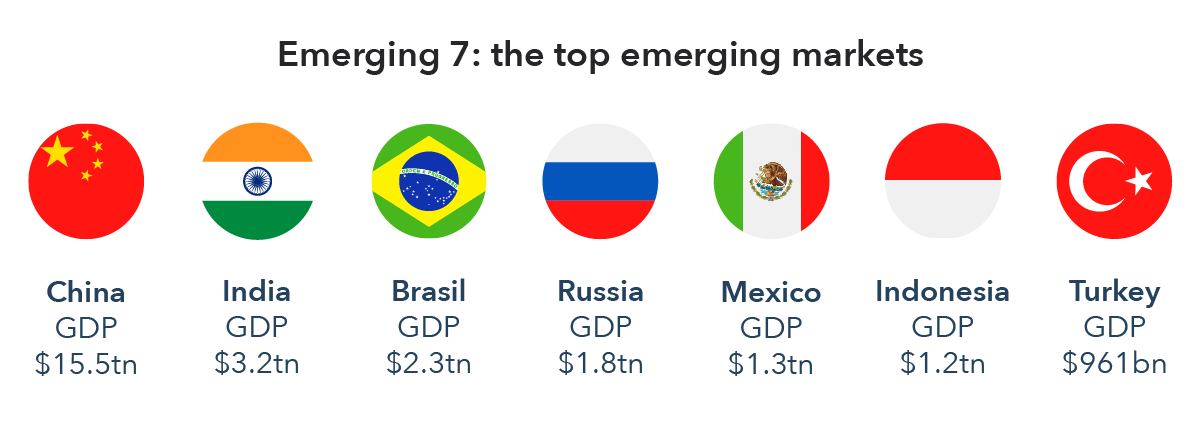
Capital is flowing back into emerging markets at a pace we haven’t seen in years. From São Paulo to Mumbai to Jakarta, stock exchanges are posting gains that make developed market returns look pedestrian. Bond yields are attracting institutional investors who spent the past decade hiding in U.S. Treasuries. Currency traders are actually bullish on the Brazilian real and Indonesian rupiah.
Emerging markets are having a moment, but the risks are real and worth examining before you chase returns.
I’ve watched this cycle play out multiple times over the past two decades. The pattern is familiar: developed market growth slows, yields compress, and suddenly everyone remembers that 60% of global GDP comes from countries outside the G7. Money floods in. Valuations climb. Financial media runs breathless coverage about the “emerging market opportunity.” Then something breaks: a currency crisis, political upheaval, commodity collapse, or contagion from a problem nobody saw coming.
This time could be different. Or it might not be. What matters is understanding both sides of the equation before committing capital. The opportunity in emerging markets right now is genuine. Demographic tailwinds, improving governance in key economies, and structural shifts in global supply chains create real long-term growth potential. But the risks haven’t disappeared just because sentiment has improved.
Let’s look at what’s actually driving this moment and where the landmines are buried.
Table of Contents
Toggle
Key Benefits
The case for emerging markets in 2024 and beyond rests on several structural factors that extend beyond the typical “growth story” narrative. These aren’t speculative projections but observable trends backed by demographic and economic data.
Primary Advantages
Valuation gaps between emerging and developed markets have widened to levels that historically precede periods of outperformance. The MSCI Emerging Markets Index trades at roughly 12 times forward earnings compared to 20 times for the S&P 500. That discount hasn’t been this pronounced since the aftermath of the 2015-2016 commodity crash.
Demographic dynamics favor emerging economies over the next two decades. While Japan, Europe, and increasingly the United States grapple with aging populations and shrinking workforces, countries like India, Indonesia, Vietnam, and Mexico have young, growing populations entering their peak productive and consuming years. India alone will add 180 million people to its workforce by 2040.
Currency valuations present another tailwind. Many emerging market currencies remain undervalued against the dollar after years of outflows. As the Federal Reserve’s tightening cycle ends and potentially reverses, dollar weakness could provide an additional boost to emerging market returns for U.S.-based investors.
The supply chain diversification trend is structural, not cyclical. Companies burned by pandemic disruptions and geopolitical tensions are actively building manufacturing capacity outside China. Mexico, Vietnam, India, and Indonesia are capturing billions in foreign direct investment as multinational corporations pursue “China plus one” strategies. This isn’t temporary: it represents a fundamental rewiring of global production networks.
Use Cases
Different investor profiles find value in emerging markets for different reasons.
Long-term retirement portfolios benefit from diversification and growth exposure. A 10-20% allocation to emerging markets reduces correlation with U.S. equities while capturing higher expected returns over multi-decade horizons. The key is maintaining the allocation through inevitable periods of underperformance.
Income-focused investors find attractive yields in emerging market bonds. Local currency government bonds in countries like Brazil, Mexico, and Indonesia offer yields between 8-12%, well above anything available in developed markets. Dollar-denominated emerging market corporate bonds provide 3-5% spreads over comparable U.S. corporate debt.
Tactical investors use emerging markets to express views on global growth, commodity cycles, or currency movements. When global manufacturing accelerates, emerging market equities typically outperform. When commodity prices rise, exporters like Brazil, Chile, and South Africa benefit disproportionately.
Thematic investors access specific growth stories: India’s digital transformation, Southeast Asia’s rising middle class, Latin America’s renewable energy transition, or Africa’s urbanization wave. These themes play out over years, not quarters, but the returns for patient capital can be substantial.
How It Works
Understanding how emerging market investing actually functions helps explain both the opportunity and the risk. These markets operate differently from developed markets in ways that matter for returns.
Liquidity varies dramatically across markets and securities. The top 50 stocks in an index like the MSCI Emerging Markets trade with reasonable depth, but smaller companies and frontier markets can be illiquid enough to trap capital during stress periods. This liquidity premium is part of why emerging markets offer higher expected returns, but it also means exit doors get crowded during panics.
Currency exposure adds a layer of complexity absent from domestic investing. When you buy Brazilian stocks, you’re making two bets: one on the companies themselves and another on the real against your home currency. Over short periods, currency movements can overwhelm equity returns. A stock might rise 15% in local terms while you lose 10% on currency translation. Over longer periods, currencies tend to reflect fundamental economic performance, but the path can be volatile.
Political risk manifests differently than in developed markets. Elections can bring dramatic policy shifts. Regulatory frameworks change with less predictability. Property rights and contract enforcement vary by jurisdiction. These factors are priced into valuations, which is why emerging markets trade at discounts, but the risks are real and can crystallize suddenly.
Information asymmetry creates both risk and opportunity. Analyst coverage is thinner, financial reporting standards vary, and corporate governance ranges from excellent to problematic. This means more potential for mispricing, which active managers can exploit, but also more potential for unpleasant surprises.
The mechanics of investing have improved substantially over the past decade. ETFs provide low-cost, liquid access to broad emerging market exposure or specific countries and sectors. Custody and settlement systems have modernized. Currency hedging is available for investors who want equity exposure without currency risk. The infrastructure for emerging market investing is better than it’s ever been, even if the underlying markets remain more volatile than developed alternatives.
Index construction matters more than many investors realize. The MSCI Emerging Markets Index is heavily weighted toward China, Taiwan, South Korea, and India. If you’re buying a broad emerging market ETF, you’re getting a lot of Asian technology exposure and relatively little Latin America or Africa. Understanding what you actually own prevents surprises when specific regions or sectors underperform.
Getting Started
Building emerging market exposure requires thinking through several practical considerations before selecting specific investments.
Start by determining your allocation target. Most institutional portfolios hold 5-15% in emerging markets, with the specific percentage depending on risk tolerance, time horizon, and existing international exposure. Younger investors with decades until retirement can justify higher allocations. Those needing capital within five years should be more conservative.
Decide between active and passive approaches. Passive ETFs offer low costs and broad diversification. The iShares Core MSCI Emerging Markets ETF charges 0.09% annually and holds over 2,800 stocks. Active managers argue that emerging market inefficiencies justify higher fees, and some have delivered meaningful outperformance, but most haven’t. Unless you have conviction in a specific manager’s skill, passive exposure makes sense as a core holding.
Consider whether to take single-country positions or stick with diversified funds. Concentrated bets on India, Brazil, or Vietnam can deliver outsized returns if your thesis proves correct, but they also concentrate risk. A diversified approach smooths returns and reduces the impact of any single country blowing up.
Think about currency hedging. Hedged products remove currency volatility but also eliminate potential gains from emerging market currency appreciation. For long-term investors, unhedged exposure makes sense because currency movements tend to net out over time and hedging costs eat into returns. Short-term investors or those with specific currency views might prefer hedged products.
Establish a rebalancing discipline before you need it. Emerging markets will underperform developed markets for stretches, sometimes years at a time. Without a systematic rebalancing approach, behavioral biases will tempt you to reduce exposure after drawdowns and increase it after rallies, exactly the opposite of what generates long-term returns.
Understand the tax implications. Emerging market funds generate foreign tax withholding that complicates tax reporting. Holding these investments in tax-advantaged accounts simplifies the situation. If you hold them in taxable accounts, ensure you’re claiming available foreign tax credits.
Build positions gradually rather than investing a lump sum. Dollar-cost averaging into emerging markets over 6-12 months reduces the risk of buying at a cyclical peak. Given the volatility of these markets, the psychological benefit of averaging in often justifies any theoretical cost of delayed full investment.
Monitor your holdings without overreacting to short-term volatility. Emerging markets can swing 20-30% in a year without any fundamental change in long-term prospects. Quarterly portfolio reviews are sufficient for most investors. Daily price checking leads to poor decisions.
The Risk Reality Check
The enthusiasm around emerging markets right now is understandable, but the risks haven’t evaporated just because sentiment has improved.
China remains the elephant in every emerging market portfolio, even as investors try to diversify away from it. A Taiwan crisis, property sector collapse, or sharp growth slowdown would ripple through global emerging markets regardless of your China exposure. Supply chains, commodity demand, and investor sentiment all connect back to Beijing.
Political instability can erase years of returns in months. Turkey’s currency collapsed 40% in 2021 after policy changes. Argentina has defaulted nine times. Even relatively stable democracies like Brazil and South Africa experience periodic crises that crush asset prices.
Commodity dependence creates vulnerability. Many emerging economies rely heavily on exporting oil, metals, or agricultural products. When commodity prices fall, their currencies, stock markets, and government finances all suffer simultaneously.
Dollar strength remains a persistent threat. When the dollar rises, emerging market debt becomes harder to service, capital flows reverse, and local currency returns translate into losses for dollar-based investors. The Fed’s policy path will influence emerging market returns as much as anything happening in those economies themselves.
Emerging markets are having a moment, and the opportunity is genuine for investors with appropriate time horizons and risk tolerance. The demographic tailwinds, valuation discounts, and structural growth drivers create a compelling case for long-term allocation. But the risks are real, and they tend to materialize when least expected.
The right approach combines disciplined allocation, diversification across countries and asset classes, and the emotional fortitude to maintain positions through inevitable periods of volatility. Emerging markets reward patient capital and punish performance chasers. Position yourself accordingly.