
How Inflation Is Quietly Eroding Your Savings
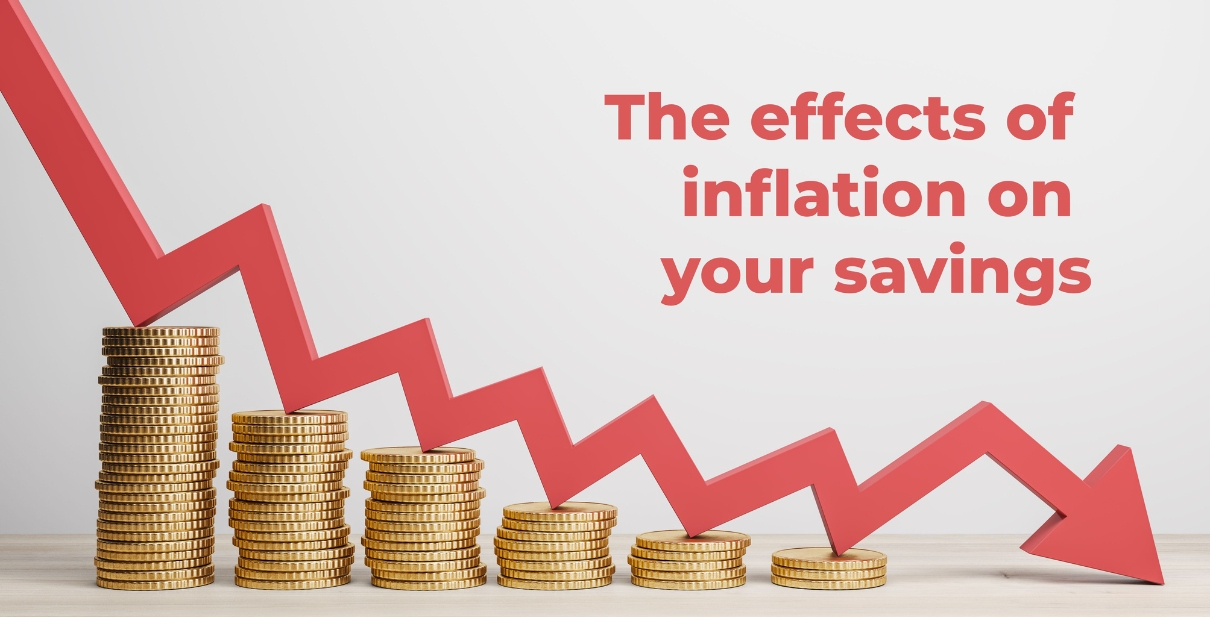
Table of Contents
Toggle
Table of Contents
Introduction
Your savings account balance looks the same as it did last year. Maybe it’s even grown a little from the interest you’ve earned. But here’s what the numbers don’t show you: that money buys less today than it did twelve months ago. This is how inflation quietly erodes your savings, working against you while you sleep, eat, and go about your daily life.
Most people understand inflation in theory. Prices go up over time. A dollar today won’t stretch as far tomorrow. But few truly grasp how aggressively this invisible tax eats away at their financial security. When your savings account earns 0.5% interest while inflation runs at 3.5%, you’re losing purchasing power every single day. That’s not growth. That’s a slow bleed.
The frustrating part? Traditional financial advice often ignores this reality. “Save your money” sounds responsible until you realize that simply parking cash in a standard account guarantees you’ll fall behind. The gap between what you earn on savings and what inflation takes from you represents real wealth destruction. Over a decade, that gap can cost you thousands of dollars in purchasing power.
Understanding this dynamic isn’t about panic. It’s about making smarter decisions with the money you’ve worked hard to accumulate.
Key Benefits
Understanding how inflation impacts your savings isn’t just academic knowledge. It’s the foundation for making better financial decisions that protect your wealth over time.
Primary Advantages
Recognizing the inflation threat gives you a significant advantage over savers who ignore it. When you understand that your money loses value sitting idle, you start asking better questions. Should I keep six months of expenses in a checking account earning nothing? Is my emergency fund actually shrinking year over year? What alternatives exist that might keep pace with rising prices?
This awareness shifts your entire approach to money management. Instead of measuring success by account balances alone, you start thinking in terms of purchasing power. A $10,000 emergency fund that becomes worth $9,300 in real terms after three years of 3% inflation isn’t actually maintaining your safety net. It’s eroding it.
People who track this relationship make different choices. They shop for higher-yield savings options. They consider inflation-protected securities. They balance the need for liquid cash against the cost of letting too much money sit idle. Real Finance Tips has consistently emphasized this balance: keeping enough accessible cash for true emergencies while putting excess funds to work in ways that at least attempt to match inflation.
The psychological benefit matters too. Understanding the mechanics of inflation removes the mystery from why your money seems to stretch less each year. It’s not your imagination. It’s math.
Use Cases
Different life situations call for different responses to inflation risk. A young professional with minimal expenses and decades until retirement faces different calculations than a retiree living on fixed income.
For someone building an emergency fund, the goal is finding the sweet spot between accessibility and yield. High-yield savings accounts now offer rates between 4% and 5% at many online banks. That’s a dramatic improvement over the 0.01% offered by traditional brick-and-mortar institutions. The difference on a $20,000 emergency fund could mean $800 to $1,000 annually instead of $2.
Retirees face a more complex challenge. Their savings must last potentially decades while inflation continuously chips away at purchasing power. A retirement nest egg that seems adequate today might fall short fifteen years from now if it’s not structured to grow. This is why financial planners often recommend maintaining some growth-oriented investments even in retirement, despite the conventional wisdom about shifting entirely to “safe” assets.
Parents saving for education costs confront one of the most aggressive forms of inflation. College tuition has historically risen faster than general inflation, sometimes by double. A 529 plan sitting in a money market fund might feel safe, but it’s almost certainly losing ground against rising education costs.
How It Works
The mechanics of inflation’s impact on savings involve a concept called real return. Your nominal return is the number you see on your bank statement. Your real return is what’s left after subtracting inflation. When your savings account pays 0.5% and inflation runs at 3%, your real return is negative 2.5%. You’re losing ground.
This math explains why keeping excessive cash reserves is actually a form of financial risk. Many people view cash as the safest option, and for short-term needs, it is. But over longer time horizons, the “safety” of cash becomes an illusion. The Federal Reserve targets 2% annual inflation as healthy for the economy. Even in good years, your money is designed to lose purchasing power.
The compounding effect makes this worse over time. If inflation averages 3% annually, prices roughly double every 24 years. That $100,000 you’ve saved will have the buying power of about $50,000 in today’s dollars by the time a generation passes. This isn’t speculation. It’s the predictable outcome of sustained inflation over time.
Central banks create inflation intentionally through monetary policy. When they increase the money supply or keep interest rates low, more dollars chase the same goods and services. Prices rise. Your existing dollars become worth less. This policy choice benefits borrowers (whose debts become easier to repay in inflated dollars) while penalizing savers.
Understanding this mechanism reveals why simply “saving more” isn’t always the answer. Saving matters enormously, but where you save and what returns you earn matter just as much. Real Finance Tips regularly covers high-yield savings options and inflation-protected investments precisely because traditional savings advice often misses this crucial point.
The inflation calculation also varies by individual spending patterns. Official inflation measures track a broad basket of goods and services. But if your personal spending skews heavily toward categories with above-average price increases, like healthcare, education, or housing in certain markets, your personal inflation rate might exceed the official numbers. Retirees often experience higher effective inflation because healthcare costs, which they consume more of, typically rise faster than average.
Getting Started
Protecting your savings from inflation requires action on multiple fronts. The first step is auditing where your money currently sits and what it’s earning.
Start by listing every account where you hold cash or cash equivalents. Include checking accounts, savings accounts, money market funds, and CDs. Note the current balance and interest rate for each. Then compare those rates to current inflation. As of now, if your accounts earn less than 3% to 4%, you’re likely losing purchasing power in real terms.
The simplest improvement for most people is moving emergency funds to a high-yield savings account. Online banks consistently offer rates several percentage points higher than traditional banks. The money remains fully liquid and FDIC-insured, but it works harder for you. This single change can make a meaningful difference without adding any complexity to your financial life.
For funds you won’t need for at least a year, consider certificates of deposit with competitive rates. Current CD rates at some institutions exceed 5% for one-year terms. You sacrifice some liquidity, but the higher return helps offset inflation. Laddering CDs, where you spread money across different maturity dates, maintains some flexibility while capturing better rates.
Series I Savings Bonds deserve attention from anyone concerned about inflation. These government-backed bonds adjust their interest rate based on inflation, providing built-in protection. The current purchase limit is $10,000 per person annually through TreasuryDirect, with an additional $5,000 available through tax refunds. The one-year holding period and early withdrawal penalties make them unsuitable for emergency funds, but they’re excellent for medium-term savings.
Treasury Inflation-Protected Securities offer another government-backed option for larger amounts. TIPS adjust their principal value based on inflation, ensuring your investment keeps pace with rising prices. You can buy them directly or through mutual funds and ETFs that hold them.
Beyond these specific products, consider your overall asset allocation. Money you won’t need for five or more years might belong in investments with higher growth potential, despite short-term volatility. Historically, a diversified stock portfolio has significantly outpaced inflation over long periods, though with considerable year-to-year fluctuation.
Real Finance Tips recommends a tiered approach: keep true emergency funds in high-yield savings for immediate access, use I Bonds and CDs for medium-term goals, and maintain growth-oriented investments for long-term objectives. This structure acknowledges that different money has different jobs and different time horizons.
The key is matching your savings strategy to your actual needs. Keeping two years of expenses in a checking account earning nothing isn’t conservative. It’s expensive. That excess cash is losing value every day. Calculate what you genuinely need for emergencies and short-term goals, then put the rest somewhere it can at least fight against inflation.
Review your approach annually. Interest rates change. Inflation fluctuates. New savings products emerge. What worked last year might not be optimal today. Set a calendar reminder to reassess your savings allocation each year, comparing your current rates to current inflation and available alternatives.
The goal isn’t to eliminate inflation risk entirely. That’s impossible without taking on other risks. The goal is to minimize unnecessary losses by being thoughtful about where your money sits and what it earns. Small improvements compound over time, just like inflation does. The difference is that compounding works in your favor when your money earns competitive returns.
Your savings represent hours of your life converted into financial security. Inflation is constantly trying to steal those hours back. Understanding this reality and acting on it is one of the most important things you can do for your financial future. Start with one change today, whether that’s opening a high-yield savings account or buying your first I Bond, and build from there.