
Inside the Fed’s Latest Rate Decision and What It Means for Investors
The Federal Reserve’s interest rate decisions ripple through every corner of the financial world, from your mortgage payment to your retirement portfolio. When the Fed moves, markets react, and investors who understand the mechanics behind these decisions position themselves to benefit rather than scramble.
The latest Fed rate decision has sparked intense debate among analysts, with some celebrating the move and others warning of unintended consequences. But the headlines only tell part of the story. Understanding what actually happened in the most recent Federal Open Market Committee meeting, and more importantly, what it signals for the months ahead, requires looking past the noise.
For individual investors, this matters more than abstract economic theory might suggest. Rate changes affect bond yields, stock valuations, savings account returns, and borrowing costs. They influence which sectors thrive and which struggle. Getting this wrong can mean leaving significant returns on the table or taking on risks you didn’t anticipate.
Real Finance Tips has tracked Fed policy shifts for years, and one pattern emerges consistently: investors who react emotionally to rate announcements underperform those who understand the broader context. The goal here is to give you that context so you can make informed decisions about your own portfolio.
Table of Contents
Toggle
Key Benefits
Understanding Fed rate decisions gives investors a significant edge in portfolio management. When you grasp the relationship between monetary policy and asset prices, you stop reacting to market volatility and start anticipating it.
The most immediate benefit is better timing on major financial decisions. Knowing whether rates are likely to rise, fall, or hold steady over the coming quarters helps you decide when to refinance a mortgage, lock in a CD rate, or shift your bond allocation. These decisions can mean thousands of dollars in savings or additional returns over time.
Primary Advantages
Informed investors gain several concrete advantages from following Fed policy closely. First, you develop a framework for understanding market movements that seem random to casual observers. Stock market drops following Fed announcements make sense when you understand how rate expectations affect equity valuations.
Second, you can identify sector rotation opportunities before they become obvious. Higher rates typically benefit financial stocks while pressuring growth companies with distant profits. Lower rates tend to boost real estate investment trusts and utilities. Spotting these shifts early lets you reposition before the crowd.
Third, you gain confidence during volatile periods. Markets often overreact to Fed news in the short term, creating buying opportunities for patient investors who understand the actual policy implications.
Use Cases
Different investors apply Fed insights in different ways depending on their situations. A retiree living on fixed income might adjust their bond ladder duration based on rate trajectory expectations. A younger investor building wealth might tilt toward growth stocks when rates appear headed lower or value stocks when tightening seems likely.
Real Finance Tips frequently helps readers identify these opportunities through our market analysis tools. One common use case involves monitoring the gap between short-term and long-term Treasury yields, which often signals economic turning points before they become apparent in other data.
Business owners use Fed guidance to time major capital expenditures. Borrowing costs for equipment financing or commercial real estate fluctuate meaningfully with rate changes, and timing these purchases well can substantially affect profitability.
How It Works
The Federal Reserve sets monetary policy through the federal funds rate, which is the interest rate banks charge each other for overnight loans. This single rate cascades through the entire economy, influencing everything from credit card APRs to corporate bond yields.
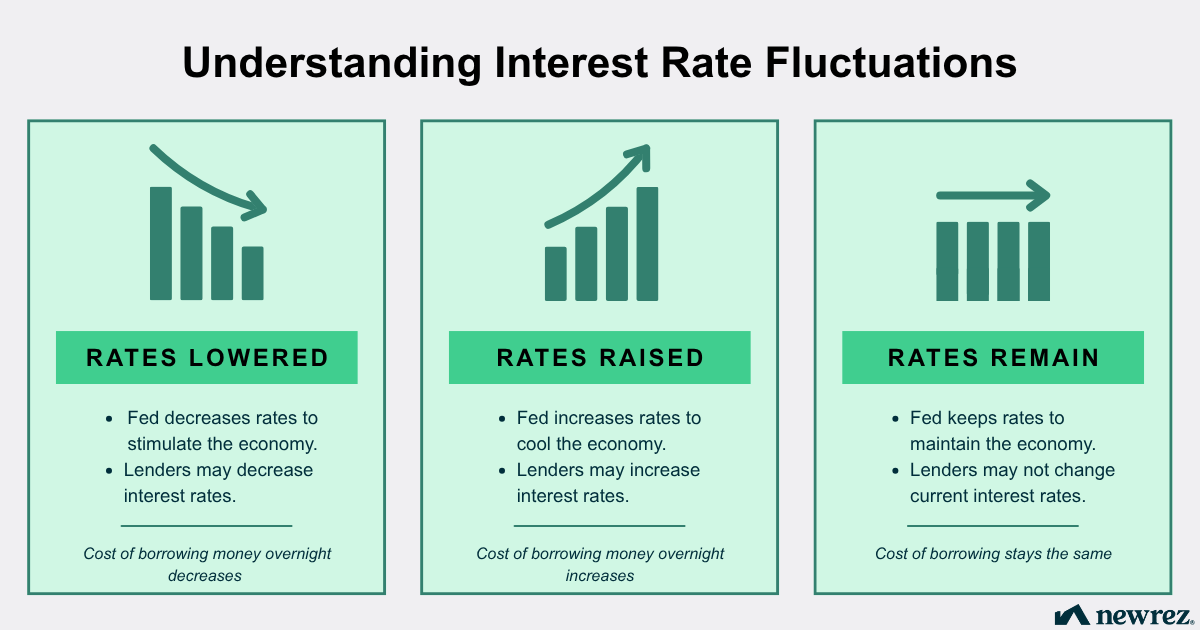
When the Fed raises rates, borrowing becomes more expensive across the board. Companies face higher costs for expansion, consumers pay more for mortgages and car loans, and the overall pace of economic activity tends to slow. The Fed typically raises rates when inflation runs too hot, attempting to cool demand and bring prices back toward their 2% target.
Cutting rates works in reverse. Lower borrowing costs encourage spending and investment, stimulating economic growth. The Fed usually cuts when the economy weakens or unemployment rises, trying to prevent recession or speed recovery.
The Fed signals its intentions through official statements, press conferences, and the “dot plot” showing individual committee members’ rate projections. Markets parse every word of these communications, sometimes moving sharply on subtle changes in language. The phrase “data dependent” has become particularly loaded, suggesting the Fed remains uncertain about its next move.
Between meetings, economic data releases like employment reports, inflation readings, and GDP figures shape expectations about future Fed actions. Bond markets price in these expectations continuously through fed funds futures contracts, giving investors a real-time view of where rates might head.
The latest decision reflected the committee’s assessment of current economic conditions against their dual mandate of maximum employment and price stability. Understanding which factor dominated their thinking helps predict future moves.
Getting Started
Building Fed awareness into your investment process requires consistent attention to a few key information sources. Start by bookmarking the Federal Reserve’s official website, where statements and meeting minutes appear shortly after each decision. Reading the actual text rather than media summaries gives you unfiltered access to the committee’s reasoning.
Track the CME FedWatch Tool, which shows market-implied probabilities for rate changes at upcoming meetings. When markets assign high probability to a particular outcome, much of that move is already priced into assets. Surprises, either hawkish or dovish relative to expectations, drive the biggest market reactions.
Real Finance Tips offers a weekly Fed Watch newsletter that distills the most relevant data points and policy signals into actionable insights. Subscribers receive alerts before major announcements with context on what to watch and potential market implications.
Consider these practical steps for incorporating Fed analysis into your investment routine:
- Review the economic calendar monthly to note upcoming Fed meetings and major data releases
- Compare your portfolio allocation against historical performance in different rate environments
- Set alerts for key inflation and employment reports that influence Fed thinking
- Maintain a watchlist of rate-sensitive investments you might add or reduce based on policy shifts
Start small by simply paying attention to Fed announcements and noting how different asset classes respond. Over time, patterns emerge that inform your own decision-making. The goal is not to predict every Fed move perfectly but to understand the range of possibilities and position accordingly.
Avoid the common mistake of overtrading around Fed events. Markets often whipsaw in the hours following announcements before settling into a more durable trend. Patient investors who wait for clarity typically outperform those who react immediately.
The Fed’s latest rate decision carries real implications for your investment returns over the coming months and years. Investors who understand the mechanics of monetary policy, track the relevant data, and maintain a long-term perspective consistently outperform those who ignore these signals or react emotionally to headlines.
The key insight from the most recent decision is that the Fed remains focused on balancing inflation control against economic growth concerns. This creates a specific environment where certain asset classes will likely outperform others. Positioning your portfolio accordingly, without making dramatic changes, gives you an edge.
Real Finance Tips continues to monitor Fed policy and its market implications through our analysis tools and newsletters. Whether you manage your own portfolio or work with an advisor, staying informed about monetary policy helps you ask better questions and make more confident decisions.
The next Fed meeting will provide additional clarity on the committee’s thinking. Between now and then, watch employment data and inflation readings for hints about their likely direction. Your portfolio will thank you for paying attention.