
The Real Cost of Buying vs. Renting a Home in Today’s Market
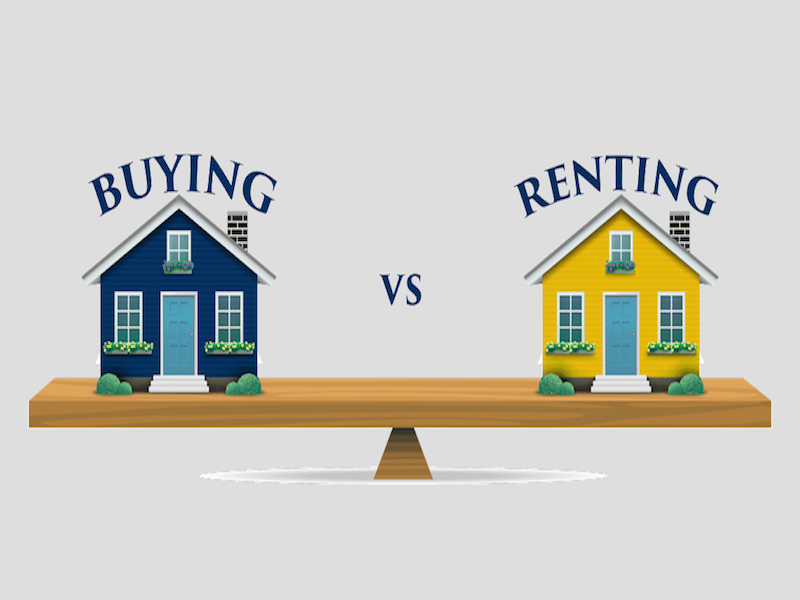
Table of Contents
Toggle
- Table of Contents
- Introduction
- Key BenefitsPrimary AdvantagesUse Cases
- How It Works
- Getting Started
- Making Your Decision
Table of Contents
Introduction
A friend called me last month, panicking. She’d just run the numbers on buying her first home and discovered that her “affordable” $350,000 house would actually cost her over $650,000 by the time she paid off the mortgage. “Is renting really throwing money away?” she asked. “Because right now, buying feels like throwing even more money away.”
She’s not wrong to question the conventional wisdom. The real cost of buying versus renting a home has shifted dramatically, and the old rules about homeownership being the automatic path to wealth don’t hold up the way they used to. Mortgage rates have more than doubled from their pandemic lows. Home prices in many markets remain stubbornly high. Meanwhile, rental markets have stabilized in several cities after years of aggressive increases.
Here’s what most financial advice gets wrong: they compare monthly mortgage payments to monthly rent and call it a day. That calculation misses about 80% of what actually matters. The true comparison involves opportunity costs, maintenance realities, tax implications, and your specific timeline. I’ve watched people make both decisions brilliantly and disastrously, and the difference almost always comes down to understanding the complete financial picture rather than just the surface numbers.
Key Benefits
The housing decision affects nearly every aspect of your financial life, which is why getting it right matters so much. Both buying and renting offer distinct advantages depending on your circumstances, goals, and local market conditions.
Primary Advantages
Buying a home builds equity over time, assuming you stay long enough and the market cooperates. When you pay down a mortgage, a portion of each payment increases your ownership stake in an appreciating asset. After 30 years, you own something outright. That’s a form of forced savings that many people wouldn’t achieve otherwise.
Homeownership also provides stability. Your housing costs become more predictable since fixed-rate mortgages lock in your principal and interest payments for decades. You can renovate, paint walls any color you want, and adopt three dogs without asking permission. For families with children, staying in one school district has real value that doesn’t show up on spreadsheets.
Renting offers flexibility that’s genuinely undervalued in most analyses. You can relocate for a better job opportunity without selling a house at a loss. Maintenance headaches belong to someone else. When the furnace dies at 2 AM in January, you make a phone call instead of writing a $6,000 check. Your down payment money stays invested in diversified assets rather than concentrated in a single property in a single neighborhood.
The liquidity advantage of renting deserves more attention. Real Finance Tips has covered this extensively: money tied up in home equity can’t easily be accessed for emergencies, opportunities, or retirement income without selling the property or taking on debt.
Use Cases
Buying makes the most sense when you plan to stay at least five to seven years in the same location. This timeline allows you to absorb the substantial transaction costs of purchasing and eventually selling. It also gives the market time to appreciate enough to offset those costs.
Consider buying if you have a stable career in a growing area, a down payment of at least 10% to 20%, an emergency fund that remains intact after closing, and the temperament to handle unexpected repairs without financial stress.
Renting works better when your life circumstances might change soon. Job uncertainty, potential relocations, relationship transitions, or simply not knowing where you want to settle all favor renting. It also makes sense when local price-to-rent ratios are extremely high, meaning buying costs dramatically more than renting equivalent housing.
I’ve seen people in expensive coastal cities rent for decades while investing the difference between their rent and what a mortgage would cost. Many of them built more wealth than neighbors who bought at peak prices and spent years underwater on their mortgages.
How It Works
Understanding the complete cost picture requires looking beyond the monthly payment comparison that most people focus on.
When you buy a home, your costs include mortgage principal and interest, property taxes, homeowners insurance, private mortgage insurance if you put down less than 20%, maintenance averaging 1% to 2% of the home’s value annually, HOA fees if applicable, and closing costs averaging 2% to 5% of the purchase price. You’ll also face selling costs of roughly 6% to 10% when you eventually move, including agent commissions, repairs, staging, and closing fees.
A $400,000 home with a 7% mortgage rate and 20% down payment costs approximately $2,130 monthly for principal and interest alone. Add $400 for property taxes, $150 for insurance, and $400 for average maintenance, and your true monthly cost reaches $3,080 before any major repairs or improvements.
Renting costs include your monthly rent, renters insurance at around $15 to $30 monthly, and potentially renter-specific fees like pet deposits or parking. That’s the complete list. The simplicity is actually valuable.
The opportunity cost calculation is where things get interesting. If you rent for $2,000 monthly instead of buying at $3,080 monthly, that $1,080 difference invested at a 7% average return grows to over $180,000 in 10 years. Your $80,000 down payment invested instead of locked in home equity would grow to roughly $157,000 over the same period.
Real Finance Tips published a calculator that helps model these scenarios with your specific numbers. The results often surprise people who assumed buying was automatically better.
The break-even timeline depends heavily on local appreciation rates, your mortgage rate, and how long you stay. In markets with 3% annual appreciation, you might break even in five years. In flat markets, it could take eight to ten years. In declining markets, you might never break even.
Transaction costs create a significant drag that’s easy to underestimate. Buying and selling a home within five years means you’ll likely lose money even if prices stay flat. Those 8% to 15% round-trip transaction costs eat into any equity you’ve built.
Getting Started
Whether you’re leaning toward buying or renting, the preparation process determines your success.
For potential buyers, start by getting genuinely pre-approved rather than just pre-qualified. This means a lender has verified your income, assets, and credit rather than just taking your word for it. Know your debt-to-income ratio and aim to keep your total housing costs below 28% of gross income, though many lenders will approve you for more than you should actually spend.
Build your down payment in a high-yield savings account where it stays liquid and earns interest until you need it. Calculate your true monthly costs using all the factors mentioned above, not just the mortgage payment your lender quotes. Set aside an additional emergency fund specifically for home repairs, separate from your regular emergency fund.
Research neighborhoods thoroughly before committing. Drive through at different times of day. Talk to potential neighbors. Check crime statistics, school ratings, and future development plans. A great house in a declining neighborhood is a terrible investment.
For committed renters, negotiate your lease terms more aggressively than you might expect. Landlords often prefer reliable long-term tenants and will offer concessions to keep good renters. Ask about multi-year leases with capped rent increases.
Automate your investment strategy so the money you’re saving by renting actually gets invested rather than spent. Set up automatic transfers to a brokerage account on the day your rent is due. Treat your investment contribution with the same seriousness as a mortgage payment.
Get renters insurance immediately if you don’t have it. It’s remarkably cheap for the protection it provides, and it covers your belongings anywhere in the world, not just in your apartment.
Consider your career trajectory honestly. If you’re in a field where the best opportunities require relocation, the flexibility of renting has concrete financial value. I’ve watched people turn down $30,000 raises because they couldn’t sell their house without taking a loss.
Track your local market conditions using resources that Real Finance Tips recommends for monitoring price-to-rent ratios. Markets change, and the right decision today might be different in two years.
Making Your Decision
The honest answer about whether to buy or rent is that it depends on factors unique to your situation. Anyone who gives you a universal answer is oversimplifying.
Run the numbers with your actual income, local prices, realistic maintenance estimates, and your genuine timeline. Use a comprehensive calculator that accounts for opportunity costs, not just a simple mortgage payment estimator. Be honest about how long you’ll realistically stay in one place.
Consider your personality and stress tolerance. Some people sleep better knowing they own their home. Others feel trapped by the responsibility and illiquidity. Neither reaction is wrong; they’re just different.
The real cost of buying versus renting in today’s market often favors renting more than conventional wisdom suggests, particularly in expensive metros and for people with shorter time horizons. But in affordable markets with strong appreciation potential and for people planning to stay long-term, buying still builds wealth effectively.
Whatever you decide, make the choice based on complete information rather than outdated assumptions. Your future self will thank you for doing the math properly rather than following generic advice that doesn’t account for your specific circumstances.