
The Rise of the Digital Yuan and Its Challenge to SWIFT
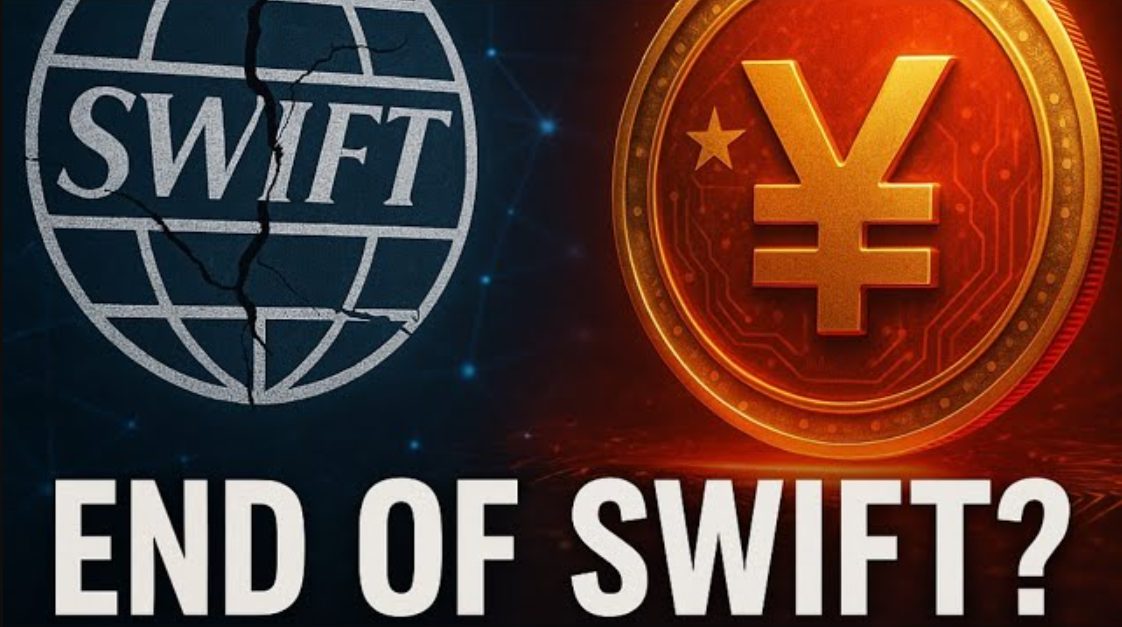
Table of Contents
Toggle
- Introduction
- Key BenefitsPrimary AdvantagesUse Cases
- How It Works
- Getting Started
- What This Means for Global Finance
Introduction
China’s central bank digital currency has quietly become one of the most significant financial experiments of the 21st century. While Western headlines focused on Bitcoin and Ethereum, the People’s Bank of China was building something far more consequential: a state-backed digital currency designed to operate independently of the global financial infrastructure that has dominated international trade since World War II.
The digital yuan, officially called e-CNY, represents more than a technological upgrade to China’s payment systems. It’s a strategic tool that could fundamentally alter how cross-border transactions work, potentially offering countries an alternative to SWIFT, the Belgium-based messaging network that currently underpins most international bank transfers. For nations facing Western sanctions or simply seeking financial independence, this alternative is increasingly attractive.
Here’s what makes this moment different from previous challenges to dollar dominance: China isn’t just proposing a new currency or payment rail. They’ve built working infrastructure, tested it with over 260 million users, and processed transactions worth billions of dollars. The digital yuan’s challenge to SWIFT isn’t theoretical anymore. It’s operational, expanding, and backed by the world’s second-largest economy.
Understanding how this technology works, who benefits from it, and what it means for global finance isn’t just relevant for economists and policymakers. Anyone involved in international business, investing, or simply paying attention to geopolitical shifts needs to grasp what’s happening here.
Key Benefits
The digital yuan offers advantages that extend far beyond simple payment convenience. These benefits explain why China has invested heavily in development and why other nations are paying close attention.
Primary Advantages
Transaction speed stands out as the most immediately noticeable improvement. Traditional cross-border payments through SWIFT can take three to five business days, sometimes longer when multiple correspondent banks are involved. The digital yuan settles in seconds. This isn’t a marginal improvement; it’s a fundamental change in how international commerce could function.
Cost reduction follows naturally from speed improvements. SWIFT transactions typically involve fees at multiple points: the sending bank, correspondent banks, and the receiving institution. These costs add up, particularly for smaller transactions or businesses operating on thin margins. Digital yuan transactions can reduce these costs by 50% or more, according to early pilot data from cross-border tests between China and Hong Kong.
Privacy features built into the system offer what Chinese officials call “controllable anonymity.” Small transactions can remain private from commercial entities while still being visible to regulators. This contrasts with both traditional banking, where institutions see everything, and cryptocurrencies, where transaction histories are permanently public on blockchain ledgers.
The programmability of digital currency opens possibilities that physical cash or traditional electronic transfers simply cannot match. Funds can be programmed to expire after a certain date, restricted to specific merchant categories, or automatically distributed according to predetermined rules. During COVID-19 stimulus programs, some Chinese cities distributed digital yuan that could only be spent at local businesses within a set timeframe, ensuring the money actually circulated rather than being saved.
Use Cases
Cross-border trade settlement represents the use case with the greatest geopolitical implications. Chinese companies trading with partners in Russia, Iran, or other nations facing SWIFT restrictions can now conduct business without touching Western financial infrastructure. This isn’t hypothetical: reports indicate that Russian companies have already begun using digital yuan for certain transactions.
Domestic retail payments have seen the widest adoption so far. Over 260 million digital wallets have been created, and transaction volumes exceeded 100 billion yuan during recent promotional campaigns. Major retailers, transportation systems, and even government services now accept e-CNY payments in pilot cities including Beijing, Shanghai, and Shenzhen.
Tourism and travel spending offers another practical application. Foreign visitors to China can download digital yuan wallets and load them with their home currency, bypassing the traditional hassle of currency exchange or the high fees charged by international card networks. The 2022 Beijing Winter Olympics served as a showcase for this functionality.
Government disbursements have become more efficient through digital yuan. Subsidies, tax refunds, and social welfare payments can reach recipients instantly, with full auditability for anti-fraud purposes. The government can verify that funds reach intended recipients and are spent as intended.
How It Works
The technical architecture behind the digital yuan differs significantly from both traditional banking systems and decentralized cryptocurrencies. Understanding these mechanics reveals why the system functions as it does and what limitations exist.
The People’s Bank of China issues digital yuan directly, making it a liability of the central bank rather than a commercial bank. This distinction matters because it means digital yuan carries the same credit risk as physical cash: essentially zero, backed by the full faith of the Chinese government. When you hold digital yuan, you’re not trusting a commercial bank to honor your deposit. You’re holding a direct claim on the central bank.
Distribution happens through a two-tier system. The PBOC issues digital yuan to authorized commercial banks and payment platforms, which then distribute it to businesses and consumers. This preserves the role of existing financial institutions while adding a new layer of central bank oversight. Alipay and WeChat Pay, which already dominate Chinese mobile payments, have integrated digital yuan into their platforms.
The underlying technology uses a permissioned blockchain architecture, though Chinese officials have been careful to avoid calling it a blockchain outright. Unlike Bitcoin’s fully decentralized ledger, the digital yuan’s ledger is controlled by the central bank. Transactions are validated by authorized nodes rather than through energy-intensive mining. This allows for high transaction throughput, reportedly capable of handling 300,000 transactions per second, far exceeding Bitcoin’s seven or Ethereum’s fifteen.
Wallet structures come in different tiers based on identity verification levels. The lowest tier requires only a phone number and allows small transactions and limited balances. Higher tiers require progressively more identity documentation but permit larger transactions and higher stored value. This tiered approach attempts to balance accessibility with anti-money laundering requirements.
Offline functionality sets digital yuan apart from most electronic payment systems. Using near-field communication technology, two devices can transfer digital yuan without internet connectivity. This feature addresses practical concerns about network reliability while also providing resilience against infrastructure disruptions.
The cross-border settlement system, called mBridge, represents the most direct challenge to SWIFT’s dominance. Developed jointly by the central banks of China, Hong Kong, Thailand, and the United Arab Emirates, with the Bank for International Settlements providing technical support, mBridge allows participating central banks to settle transactions directly using their respective digital currencies. Pilot transactions have already been completed, demonstrating that the technology works in practice.
Getting Started
For businesses and individuals looking to understand or engage with the digital yuan ecosystem, several practical pathways exist depending on your location and objectives.
If you’re operating within China, accessing digital yuan is straightforward. Major commercial banks including ICBC, Bank of China, and China Construction Bank offer digital yuan wallet services through their mobile apps. Registration requires a Chinese phone number and, for higher-tier wallets, identity documentation. Once registered, you can receive digital yuan from employers, government programs, or by converting from your bank account.
Foreign visitors to China gained expanded access starting in 2023. International travelers can download approved wallet apps and link foreign payment cards to load digital yuan. Visa and Mastercard integration allows conversion from foreign currencies, though exchange rates and fees vary by provider. This represents a significant expansion from earlier pilot phases that restricted access to Chinese residents.
Businesses interested in accepting digital yuan need to work with authorized payment service providers. The major platforms, Alipay and WeChat Pay, have integrated digital yuan acceptance into their existing merchant services. For businesses already accepting these platforms, adding digital yuan often requires minimal technical changes. Point-of-sale systems in pilot cities increasingly support e-CNY by default.
For those outside China watching these developments, direct participation remains limited but monitoring options exist. Academic institutions, think tanks, and financial research organizations publish regular analyses of digital yuan adoption metrics and policy developments. The Bank for International Settlements releases technical papers on mBridge and related central bank digital currency projects.
Financial institutions globally are studying digital yuan architecture as they consider their own digital currency strategies. Over 100 central banks are now exploring CBDCs, with many explicitly citing China’s progress as motivation for accelerating their own timelines. The European Central Bank’s digital euro project and the Federal Reserve’s research into a potential digital dollar both acknowledge the competitive pressure created by China’s head start.
Understanding the regulatory landscape matters for anyone considering involvement. China maintains strict capital controls, and digital yuan doesn’t change these fundamental restrictions. Moving significant funds into or out of China still requires compliance with existing regulations. The digital yuan makes certain transactions easier but doesn’t eliminate regulatory requirements.
The geopolitical dimensions deserve attention from anyone in international business. As more countries face potential exclusion from SWIFT, whether through sanctions or political tensions, alternatives like the digital yuan become strategically relevant. Companies with supply chains touching China, Russia, or other nations seeking SWIFT alternatives should understand how digital yuan settlement might affect their operations.
What This Means for Global Finance
The digital yuan’s expansion doesn’t spell immediate doom for SWIFT or dollar dominance, but it does introduce genuine competition where none existed before. SWIFT processed over 42 million messages daily in 2023, connecting more than 11,000 financial institutions across 200 countries. That infrastructure won’t be replaced overnight.
What’s changing is optionality. Countries and companies that previously had no choice but to use dollar-denominated SWIFT transactions now have an alternative, even if that alternative comes with its own complications and dependencies. For nations under Western sanctions, this alternative represents a lifeline. For others, it’s leverage in negotiations and a hedge against future geopolitical uncertainty.
The trajectory seems clear: digital currencies issued by central banks will play an increasingly important role in international finance. China has a substantial lead in deployment and real-world testing. Whether that lead translates into lasting influence depends on factors beyond technology, including trust, governance, and the responses of competing powers.
For now, the practical advice is simple: pay attention, understand the mechanics, and recognize that the financial infrastructure we’ve taken for granted is entering a period of genuine change.